
Gender and the Screen
Part Two
Experiences with gender diversity behind the camera in the Australian screen industry


Speaking to an array of inspiring and influential creatives, we look further into the history of gender diversity behind the camera, as well as why having more women in creative roles is intrinsically important to the industry’s future.
Denise Eriksen and Esther Coleman Hawkins
Denise Eriksen and Esther Coleman Hawkins have a wealth of experience in both the Australian and international television industries. In 2019, they founded Media Mentors Australia, an organisation dedicated to helping creatives forge their own career pathways.
"I can't tell you how many development rooms I was in where I was the only woman,” Esther told us. “I have spent a career in development where I've been the only woman."
She described her experiences as a sole woman on a production as “irritating and draining”, with her ideas constantly falling on deaf ears.
Denise has frequently confronted a similar circumstance, recounting what she once said to a group of men around a production lunch table: "I said it's like being an Italian who only speaks Italian, sitting at a table with Greek people who only speak Greek. Because our languages are different. And unless we find the common language, we're not going to communicate."
_________________________________________
Looking to one of the causes of gender inequality, Esther explained how by “just [using] the people that you’ve always used”, women struggle to get their debut opportunity in creative roles.
She also mentioned the impact of implicit bias in employment decisions made by production companies.
"I would do implicit bias training for all people in positions of authority. I'd make it a regular, mandatory part of their professional development if they work in a screen agency or if they work in a broadcaster."
Denise said the lack of gender diversity behind the camera was a result of the workplace environment, which is “way less compassionate than it was”.
"It's not a fair playing field, but it's one you have to play in."

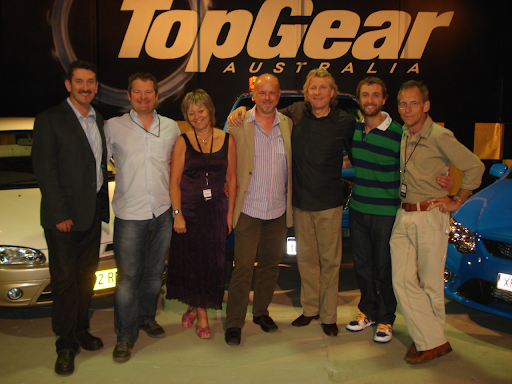
Denise Eriksen as Executive Producer of Top Gear Australia for SBS. (Photo: supplied)
Denise Eriksen as Executive Producer of Top Gear Australia for SBS. (Photo: supplied)

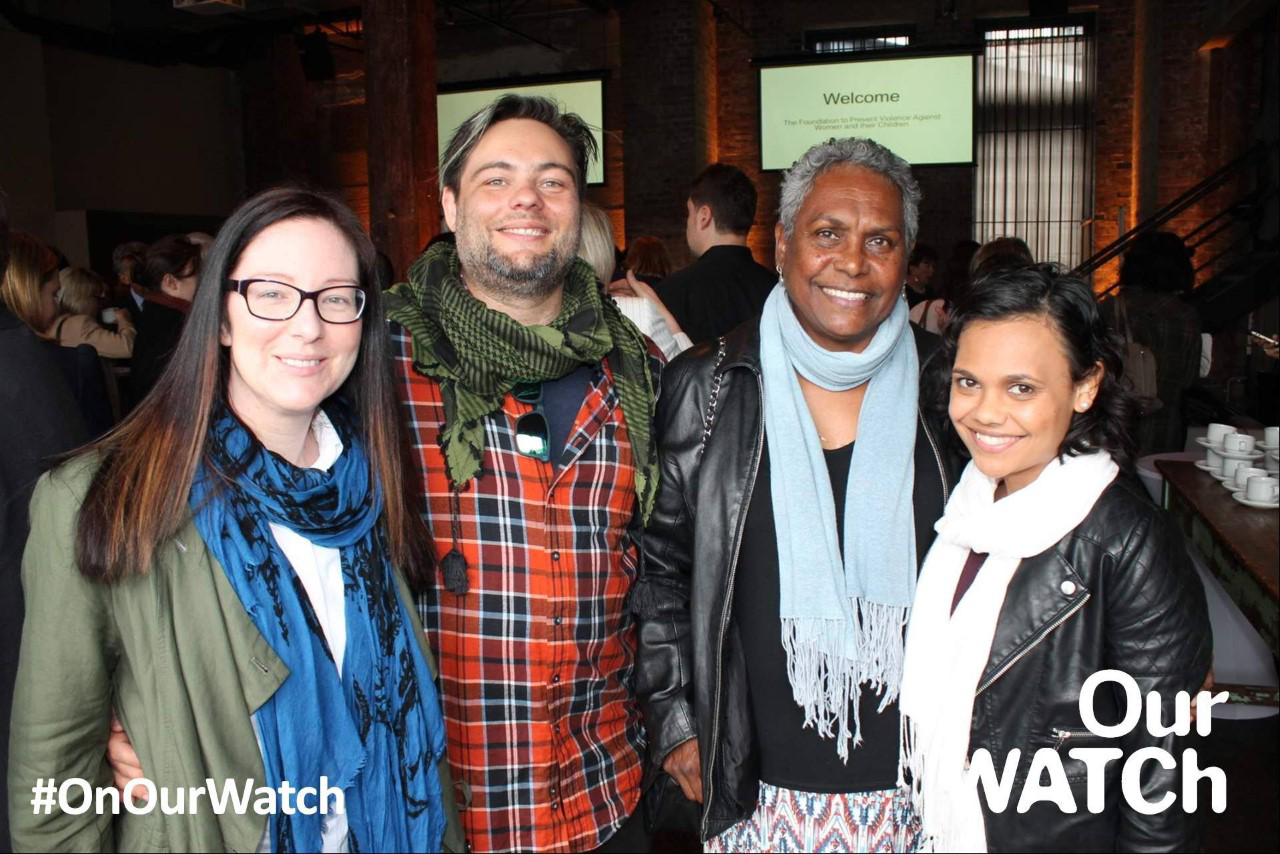
Esther Coleman Hawkins (left) with Miranda Tapsell (right), at the launch of Our Watch. (Photo: supplied)
Esther Coleman Hawkins (left) with Miranda Tapsell (right), at the launch of Our Watch. (Photo: supplied)
Lisa French
Lisa French has devoted her career to researching women’s participation in the Australian screen industry.
Her knowledge of the topic has landed her the role of Dean of Media and Communication at RMIT University, as well as the only academic on Screen Australia’s Gender Matters Taskforce.
Her most recent writing on the topic, ‘Gender Still Matters: Towards Sustainable Progress for Women in Australian Film and Television Industries’, explored the Gender Matters funding initiative, as well as the history leading up to its inception in 2015.
Through the 1970s to 1990s, women’s participation in the industry boomed, coinciding with the rising feminist movement in Australia and targeted funding to promote women in screen. But when this funding was withdrawn in the late 1990s, women’s progress slowed to the crawl it is still at in some areas of the industry today.
___________________________
Without funding promoting women, factors such as unconscious bias, pay disparity, a lack of work/life balance, and male gatekeepers standing in the way of female-driven and female-created productions have continued to weaken women’s attempts to break into the industry.
The Gender Matters initiative is doing something to remedy this, however.
“It was a very effective $5 million, I think,” Lisa said of the money set aside to ensure 50 per cent of key creative roles in half of Screen Australia funded productions were filled by women across a three year period.
“Even though one initiative can't really make the kind of change that's needed, a whole of industry change is required…I'm optimistic that changes are being made.”

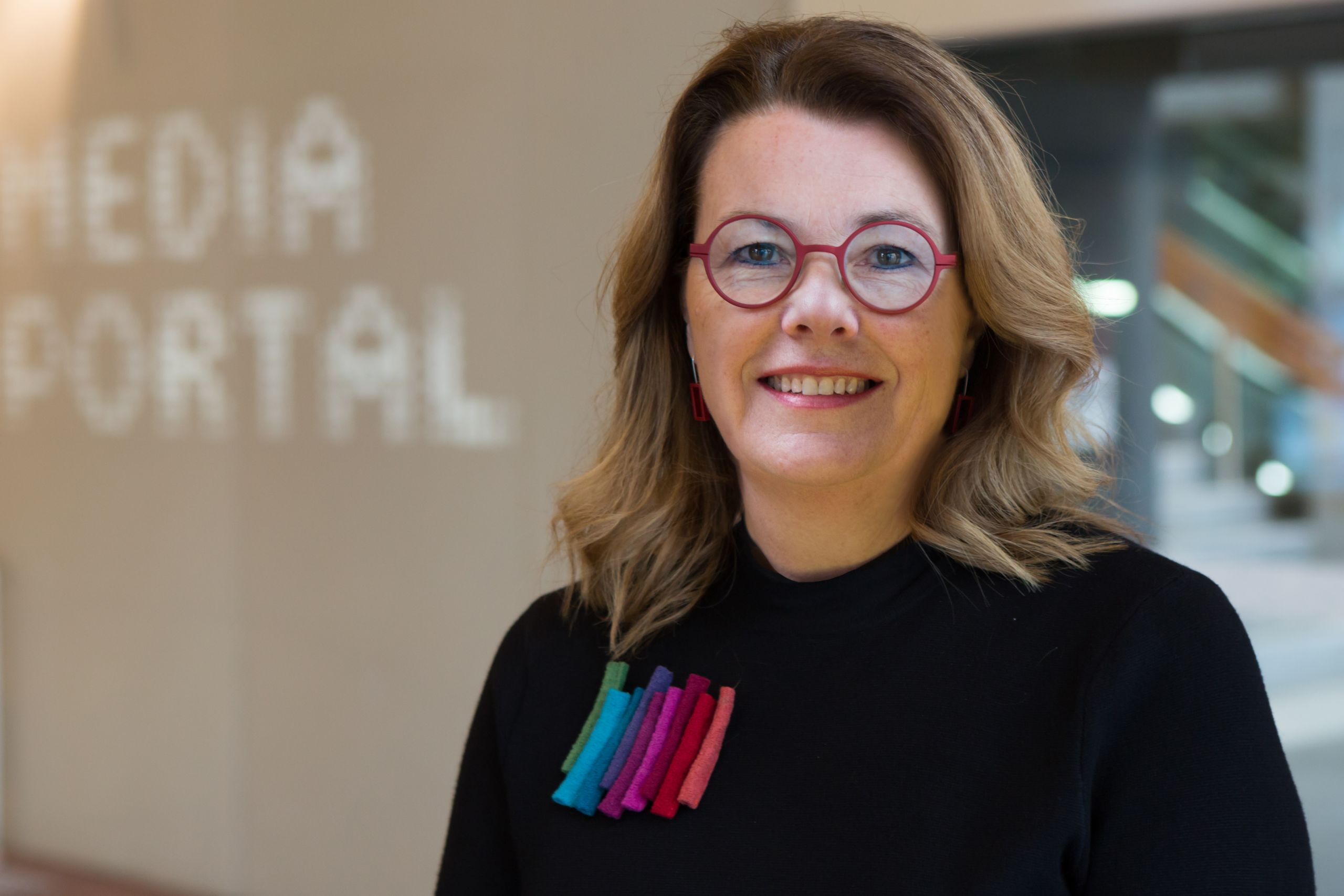
Lisa French. (Photo: Sarah Adams)
Lisa French. (Photo: Sarah Adams)
Katie Milwright
As an award-winning director of photography, Katie Milwright has developed an outstanding portfolio throughout her career. She has worked on the projects of Celeste, Gurrumul, Netflix’s first Australian original series Tidelands and Josh Thomas’ Please Like Me.
“[Cinematography] used to be quite a boys club. When I was working as a camera assistant, I would quite often be the only woman on set,” she said. “Sometimes that did feel a bit tense and did feel a bit overwhelming.”
She believes one of the key issues leading to women’s continued lack of representation in the industry is that the time when female cinematographers have had enough experience to start securing good jobs, is also when many women choose to start a family.
“That obviously can throw a lot of things into disarray as to how you work, how you take work, what you can accept or how people see you,” Katie said.
Luckily, some producers are becoming more aware of the importance of family, and making arrangements for family visits during filming.
_____________________________
Currently, Katie said there is a “genuine trend” towards gender equality throughout the industry.
“There’s less of an obstacle at the moment. There seems to be a real push for gender diversity in Heads of Department and all roles in the filmmaking world as well as everywhere else.”
Listen to our extended interview with Katie here.

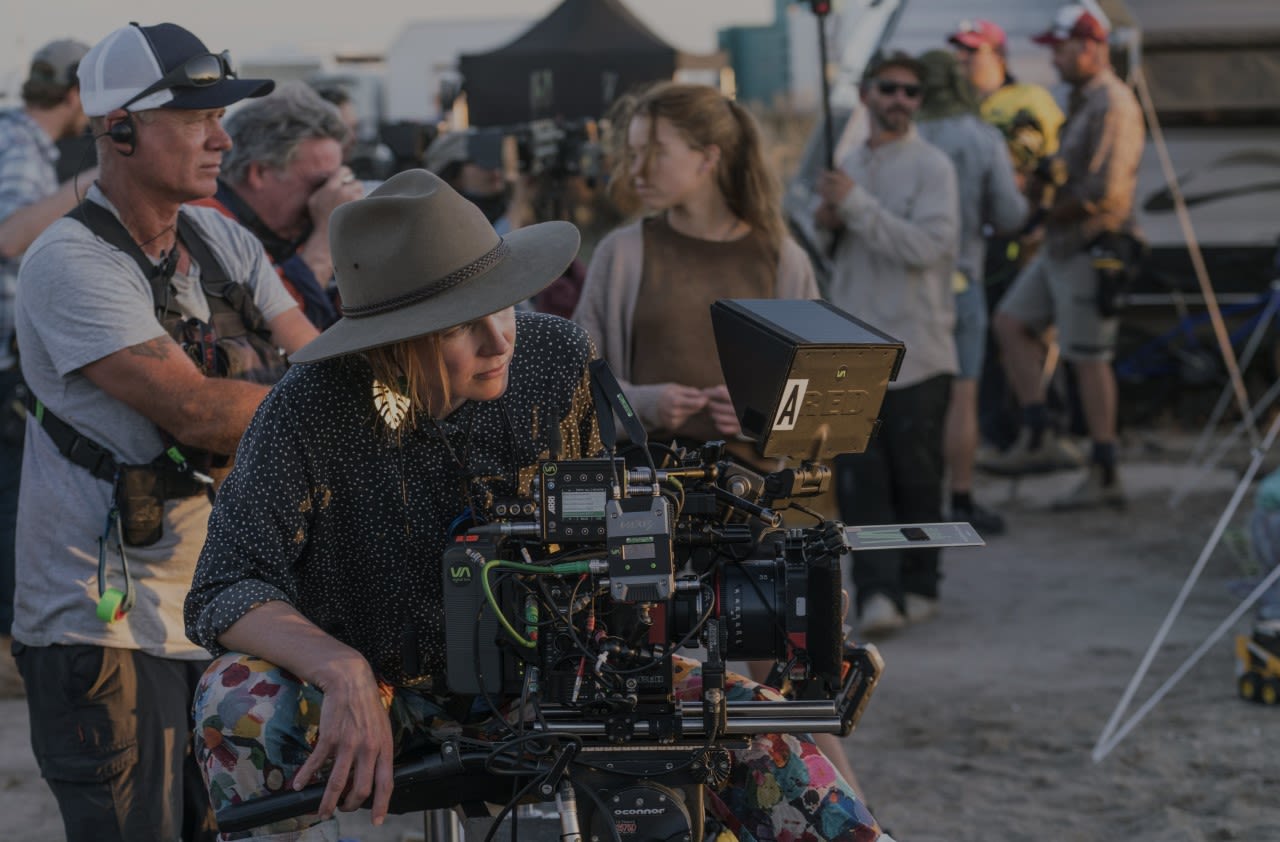
Katie on set for the 2019 mini-series Upright. (Photo: supplied)
Katie on set for the 2019 mini-series Upright. (Photo: supplied)

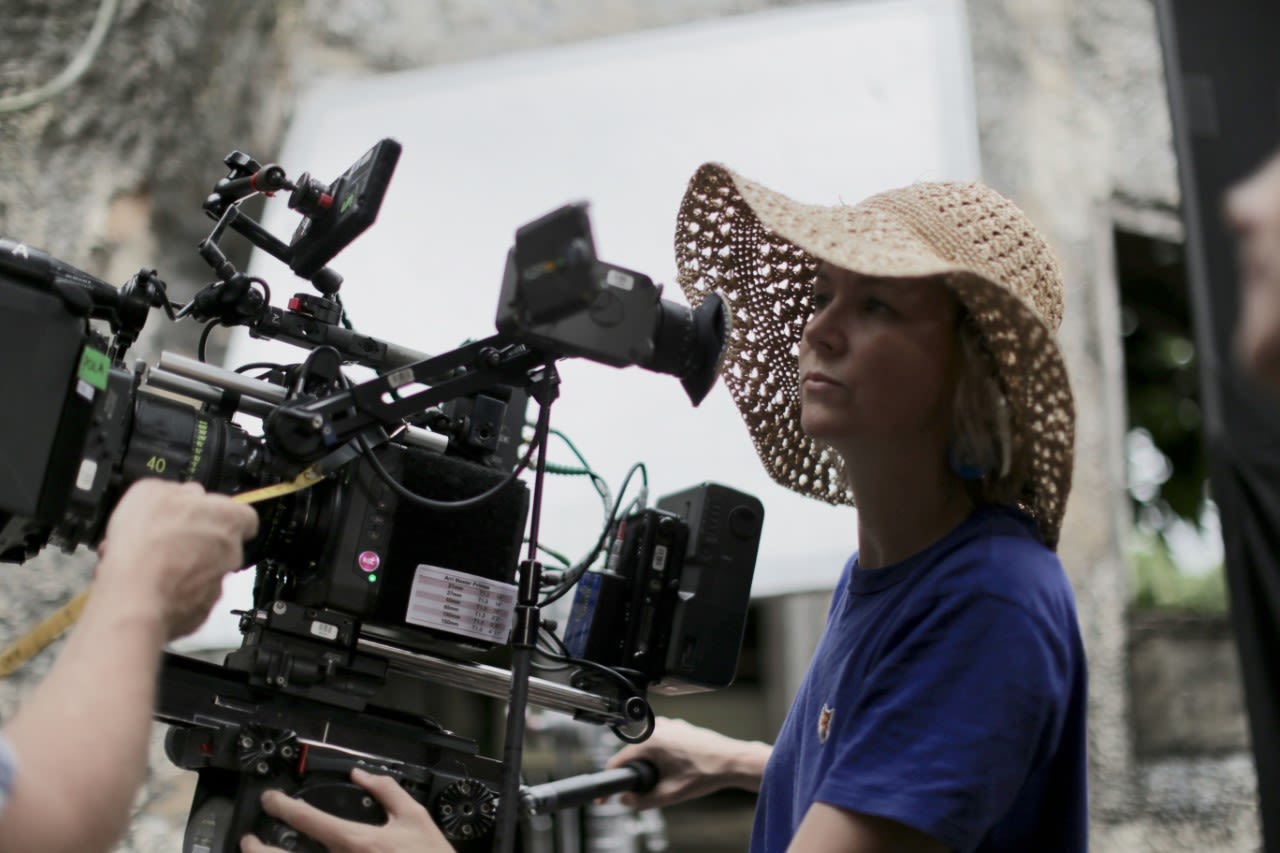
Katie filming for the 2018 feature film Celeste. (Photo: supplied)
Katie filming for the 2018 feature film Celeste. (Photo: supplied)
Elise McCredie
Elise McCredie is one of the nation’s most highly regarded directors and screenwriters. Throughout her career, she has worked on the acclaimed film Ride Like A Girl, the Emmy-winning series Nowhere Boys and AACTA-winning mini-series Sunshine.
When asked about the experiences in her earlier years of film directing, Elise discussed the difficulty of having her creative voice heard for the second time. “It was almost impossible for me to get a second feature up. And I won’t say it was because I'm a woman or because it was about female issues. But I'd watch all those other films by male auteurs get up through the 2000s. And there was a frustration in that.”
These sentiments became a point of motivation in her work as a female director. “I think the reason I wrote my [first] film Strange Fits of Passion was directly in relation to that feeling of the injustice of it.”
___________________________
Elise was the writer, co-creator and showrunner of Stateless, a six-episode Australian drama series released in March this year which she executively produced alongside actress Cate Blanchett and Tony Ayres. All Heads of Department (except for make-up) in the production were female.
Yet whilst the issue of gender diversity is undoubtedly important for Elise, it’s the word ‘diversity’ that proves to be problematic. And it’s clear to see why.
“We’re half the population. I get a bit annoyed when ‘female’ is put into diversity. I think they're very different things because women are more than half of the population. So we're not diverse.”

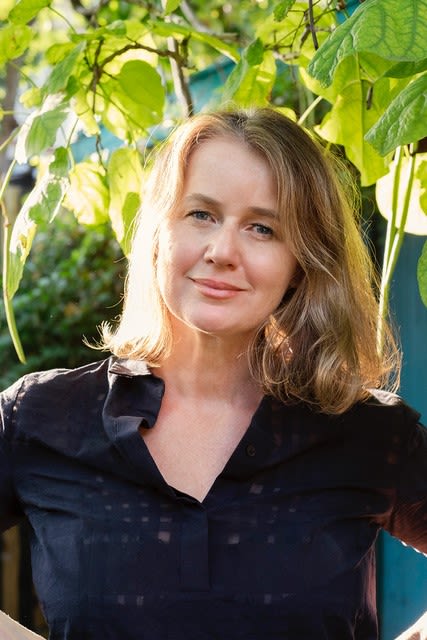
Elise McCredie. (Photo: supplied)
Elise McCredie. (Photo: supplied)
Andrew Knight
When Andrew Knight started his extensive scriptwriting and producing career, the networks were “bloke-city”.
“I'm very grateful that I got the benefit of being a male, or white male, in a white male society and I've had a privileged life,” he said.
Andrew’s resume includes the award-winning Rake and Hacksaw Ridge, The Water Diviner, Seachange, Full Frontal, Ride Like A Girl and more.
_____________________________
Writing strong female characters has always been important to Andrew, and his way of promoting gender equality. He models himself on Billy Wilder, who turned housewife characters during the ‘50s and ‘60s into powerful roles that drove the plot.
“You can't just keep making films where women sit back and admire the guys doing heroic things. It's just stupid,” Andrew said.
He also enjoys working with women behind the camera, and finds their ability to open his eyes to new perspectives “liberating”.
“I use a terrific script editor who always gives you a perspective you hadn't thought of and will say things like 'no woman would say that or even think that'.”
Into the future, Andrew sees it as “critical” gender equality is achieved.
“I think it's critical that we get a world that's 50/50 - actually 51/49.”
Niki Aken
With a strong passion for televisual storytelling, Niki Aken has pursued a creative and innovative profession as writer and script producer in the industry. Her career highlights include working on the 2019 mini-series Upright, as well as co-writing the SBS drama series, The Hunting.
Her first experience noticing a lack of gender diversity in the industry was before this, though, as a cinema projectionist.
“I was often the only female rostered on for the week [which] made me seem extraordinary, and perpetuated the harmful stereotype that men were more suited for the role, where in fact it was a skill that anyone could learn if they were given the opportunity,” she said.
Entering the workforce as a screenwriter, there was still an evident imbalance in female representation.
“When I started out, I noticed that Heads of Department were majorly male. Until The Hunting in 2018, every single job I wrote on, the director of my episode was male.”
Niki said she personally has not worked in many writers’ rooms where she has been the only female present. “I probably wouldn’t take the job if this were the case,” she said.
___________________________
Alongside her work as a screenwriter, Niki is currently involved with the Australian Writers' Guild' Diversity and Inclusion Action Committee, producing and facilitating a range of partnerships, opportunities and events aimed at fostering inclusion and equal opportunity in the industry.
"Discrimination can be insidious, and I think a really simple solution is for more people to challenge the status quo. It shouldn’t be up to a handful of activists to change things, it needs to come from all tiers, top down.”

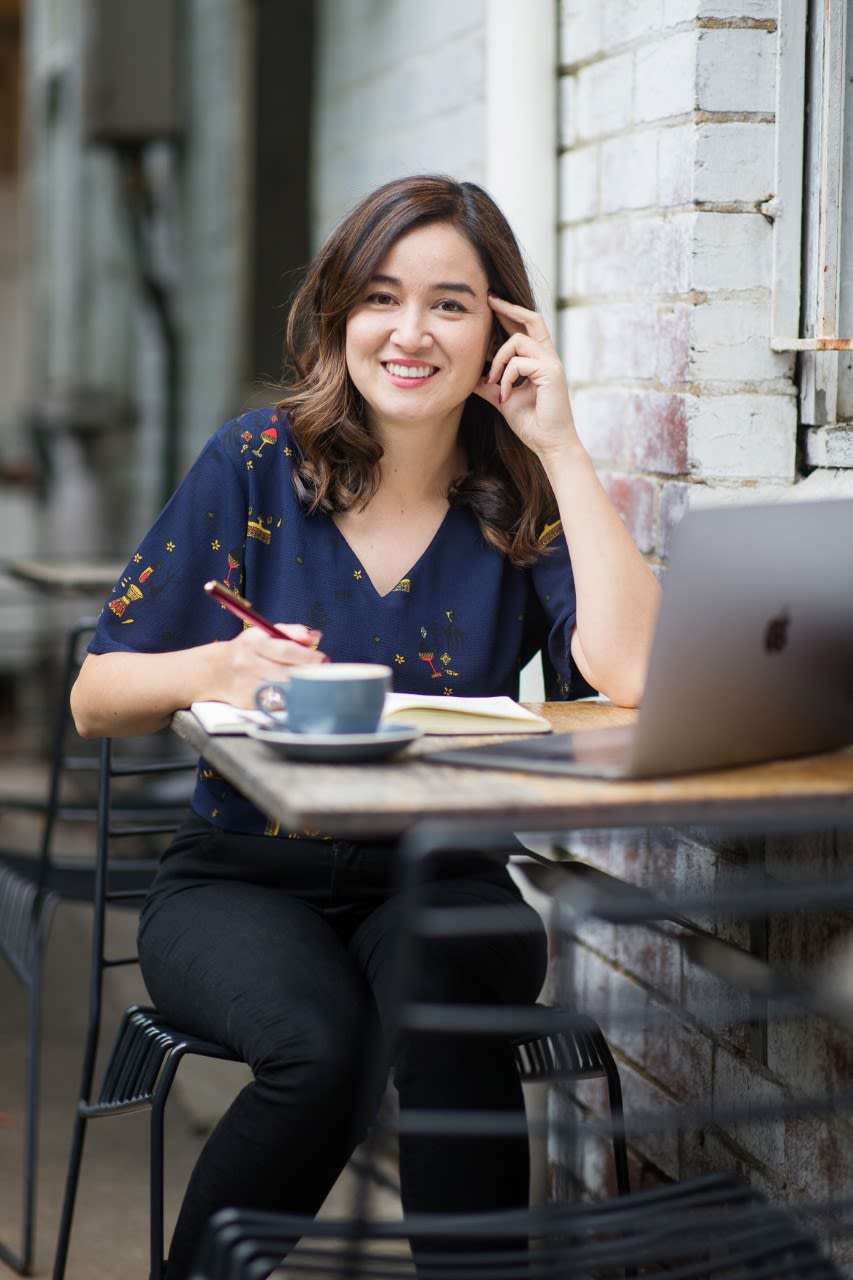
Niki Aken. (Photo: supplied)
Niki Aken. (Photo: supplied)
Sue Maslin
Sue Maslin is perhaps best known as the producer of one of the Australian screen industry’s most successful films - The Dressmaker. The female-driven film took in over $20 million at the box office.
For Sue, the main barrier for women in the industry is their lack of representation in leadership positions. This has led her into her role as President of the Natalie Miller Fellowship, which aims to “recognise, nurture and assist women to develop their own leadership ambitions”.
“You need to start to really look at who occupies the leadership roles in this industry, who gets to greenlight, and that's where the Natalie Miller Fellowship comes in,” Sue explained.
“In the last five years or so, there's just been an explosion of interest and content and engagement with women filmmakers. But there's no point having that explosion in creative energy and work...if the people who decide what gets financed, or what gets actually programmed on our screens, are all men.”
Listen to our extended interview with Sue here.

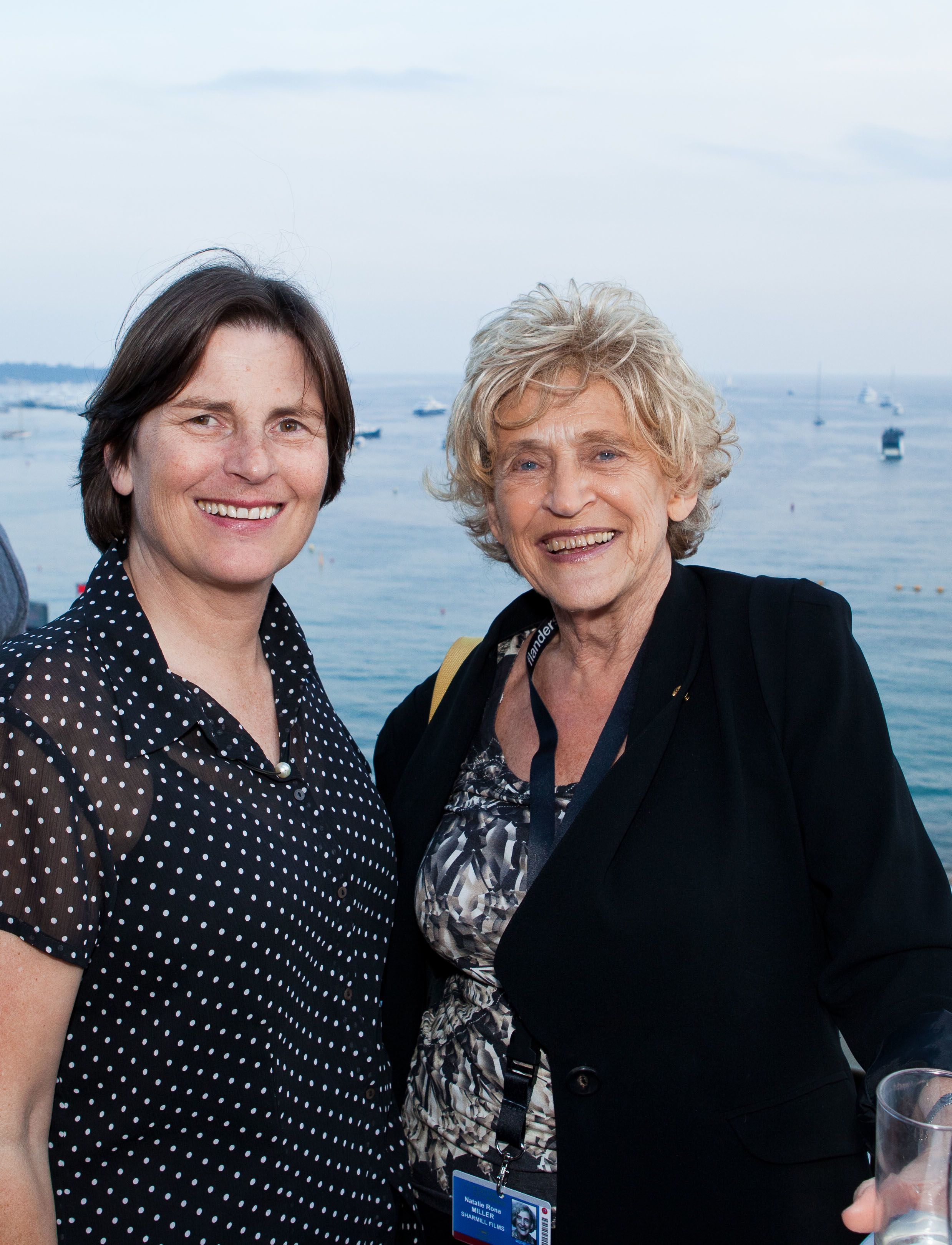
Sue Maslin and Natalie Miller - Cannes 2011. (Photo: supplied)
Sue Maslin and Natalie Miller - Cannes 2011. (Photo: supplied)

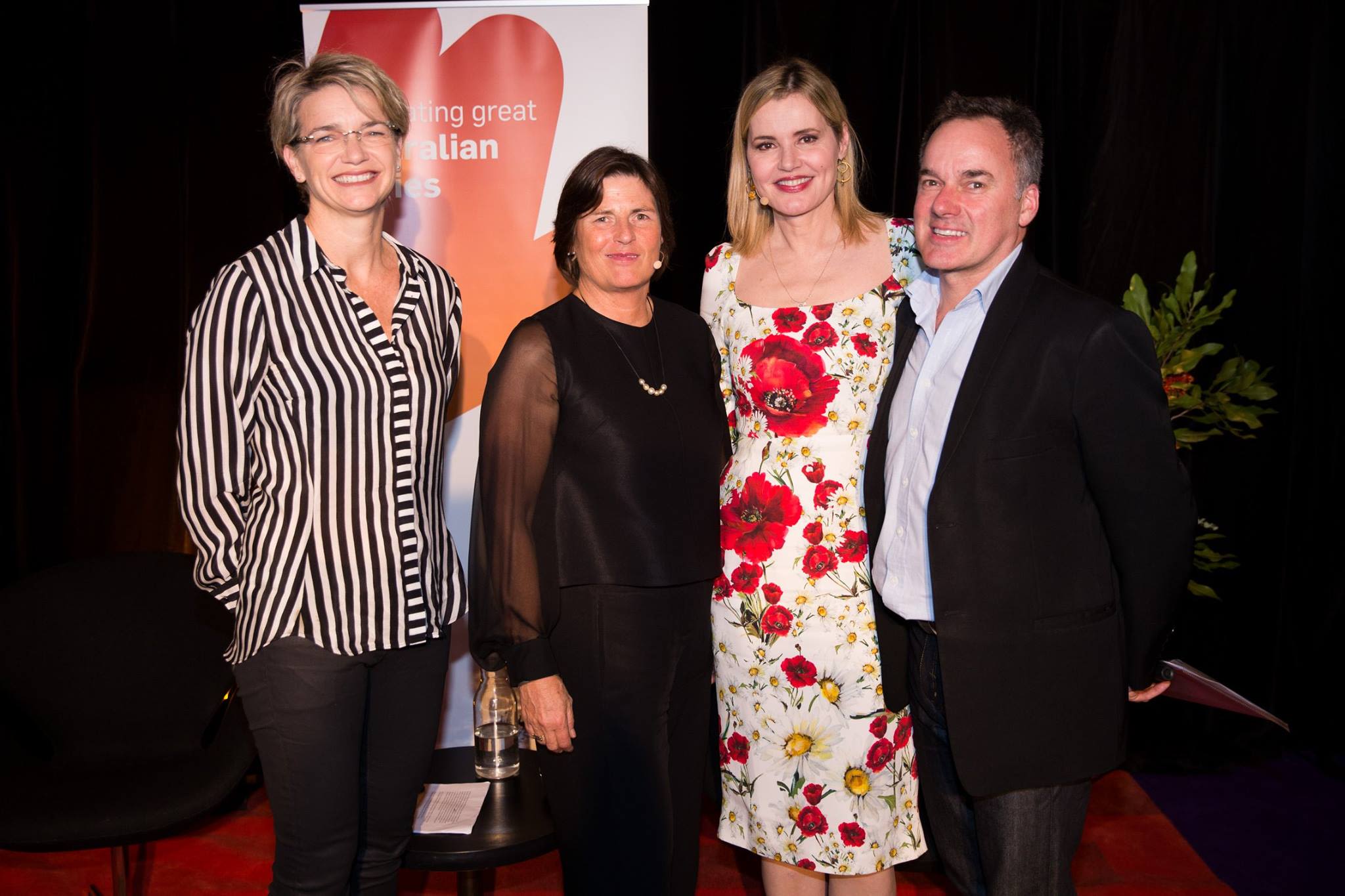
Sue (second from left) at a Geena Davis event. (Photo: supplied)
Sue (second from left) at a Geena Davis event. (Photo: supplied)
Christian White
As both an acclaimed author and screenwriter, Christian Write knows the impact of powerful storytelling on audiences. With his most recent project being the writer for film Relic, he also knows the invaluable impact of working with multiple female creatives behind the camera.
“You really want to create from a place that is safe and supportive and empathetic and you know, very generally speaking, you do get that more with women,” he said. “If you're writing from a safe place, you write with more freedom, and I think you get a bit more truth in your work that way.”
Relic was directed by Natalie Erika James, a “creative genius” Christian proclaimed.
___________________________
When asked about the attitudes from other men towards furthering gender diversity in the industry, Christian said the men he has worked with, "generally speaking, are at least well aware of it and I believe sensitive to it”.
Yet despite the optimistic outlooks, he also reinforced the history of the issue at hand. “I think we are moving towards something more positive, but it's really undeniable that men have had it much easier than women and been given much more opportunities.”
For Christian, the most fundamental area of importance in achieving gender equality behind the camera comes down to the notion of diverse storytelling. Where an abundance of new and necessary stories are heard. And where audiences are entertained indefinitely.
“You know, undeniably, [when] that voice is male, you're really just getting half the story.”

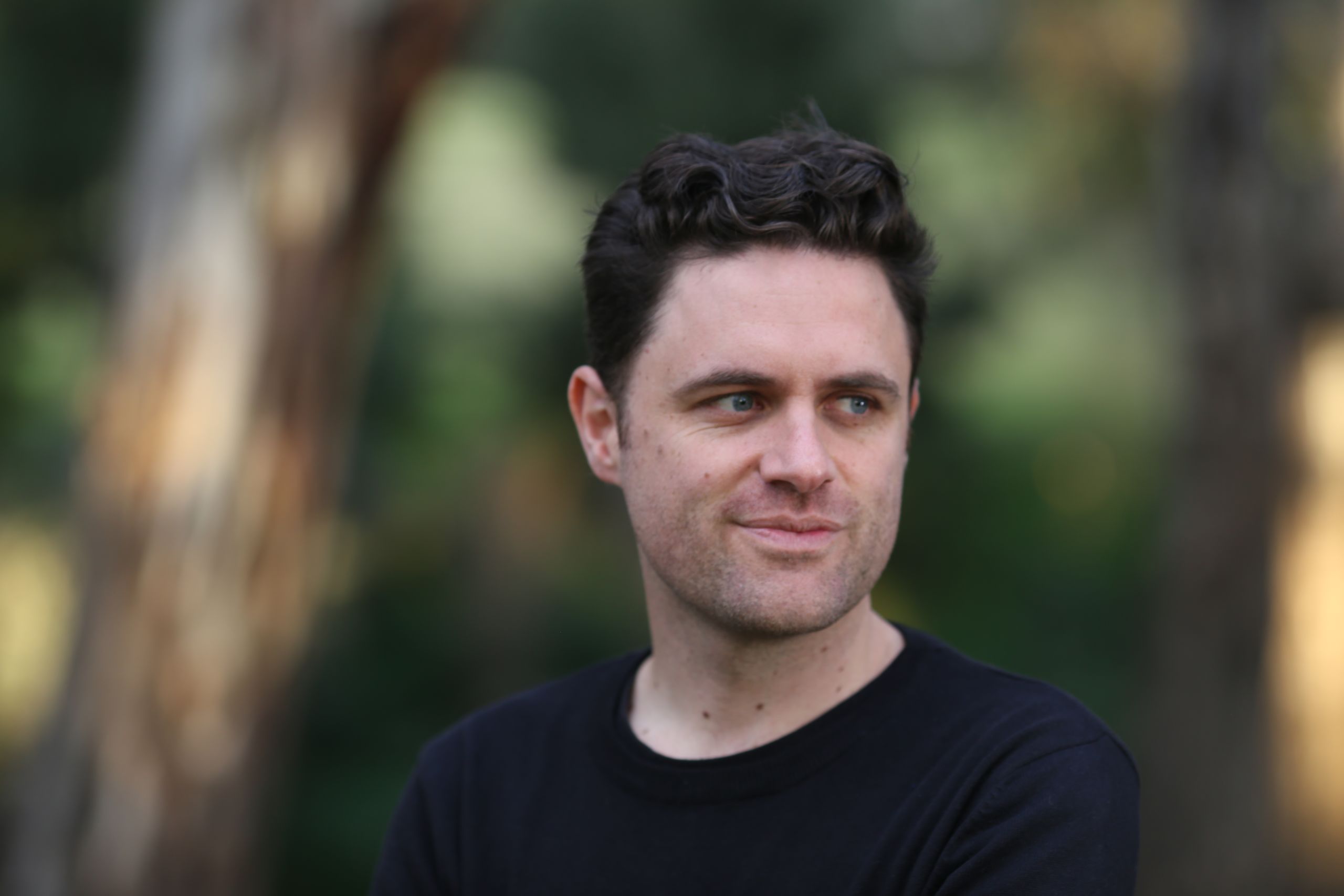
Christian White. (Photo: supplied)
Christian White. (Photo: supplied)
Joanna Werner
As both the Taskforce Chair of Screen Australia’s Gender Matters initiative and an influential screen producer, Joanna Werner has developed a notable career reputation. In addition to working in multiple leading roles, including Executive Producer, Producer and Co-Creator of Dance Academy, she has also been recognised with Logie and AACTA awards, and Emmy nominations.
When discussing Gender Matters as one of the most important steps forward to help increase gender diversity in the Australian screen industry, Joanna commended the work of Screen Australia in the initiative’s establishment.
“Screen Australia has been incredibly supportive and real world leaders in trying to achieve gender balance and equality in the screen industry, in front of and behind the camera,” she told us.
_____________________________
For Joanna, the continued success of Gender Matters as it enters its second version relies on creating further opportunities for women, as well as influencing the way producers think.
“All of these roles that have been so traditionally, incredibly male skewed, [we’re] really trying to open up opportunities in for women to get credits. And also, just to make producers stop and think before they cast and have all of their crew on board: What's the gender makeup of our crew? How close to 50/50 can we get? And even just by having that in the producers minds, it will hopefully start to see systemic change in the industry.”
And when asked why this endeavour is fundamentally important to the future of the industry, her answer was concise yet compelling:
“So that my three-year-old daughter, if she decides to work in the screen industry, has no hesitation in thinking that she can do absolutely anything.”
Listen to our extended interview with Joanna here.

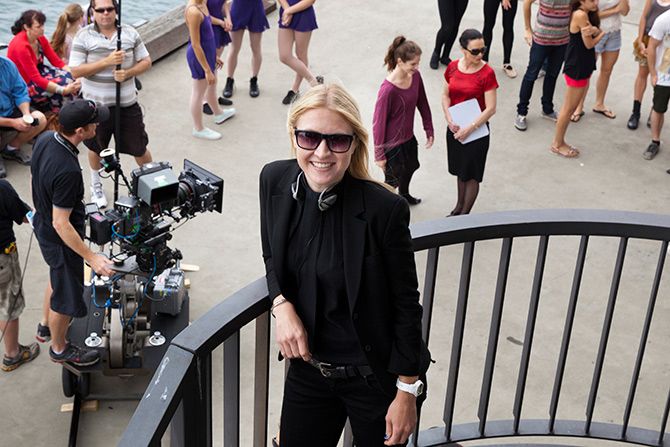
Joanna Werner. (Photo: supplied)
Joanna Werner. (Photo: supplied)

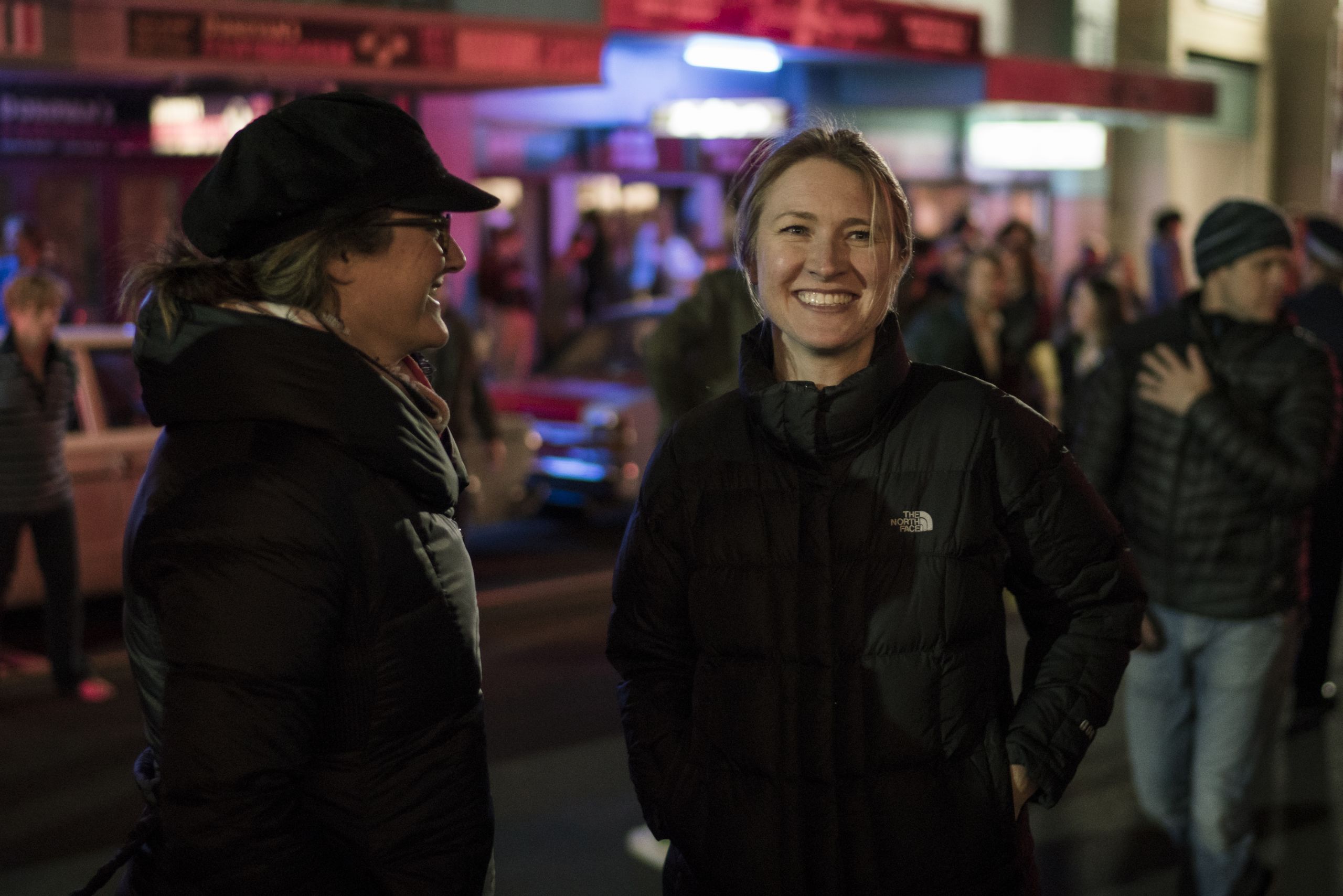
Joanna Werner. (Photo: Mark Rogers)
Joanna Werner. (Photo: Mark Rogers)
Part one of this article series can be read here:
To listen to our podcast series of interviews with the creatives included in this article, search for 'Gender and the Screen' anywhere you get your podcasts from, or by clicking here.
 Built with Shorthand